“Money comes here and stays here because it can go if it wants to go”
John James Cowperthwaite, Financial Secretary of Hong Kong (1961 to 1971).
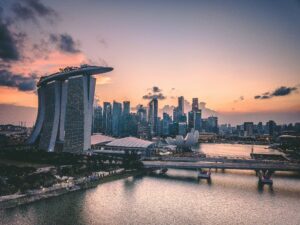
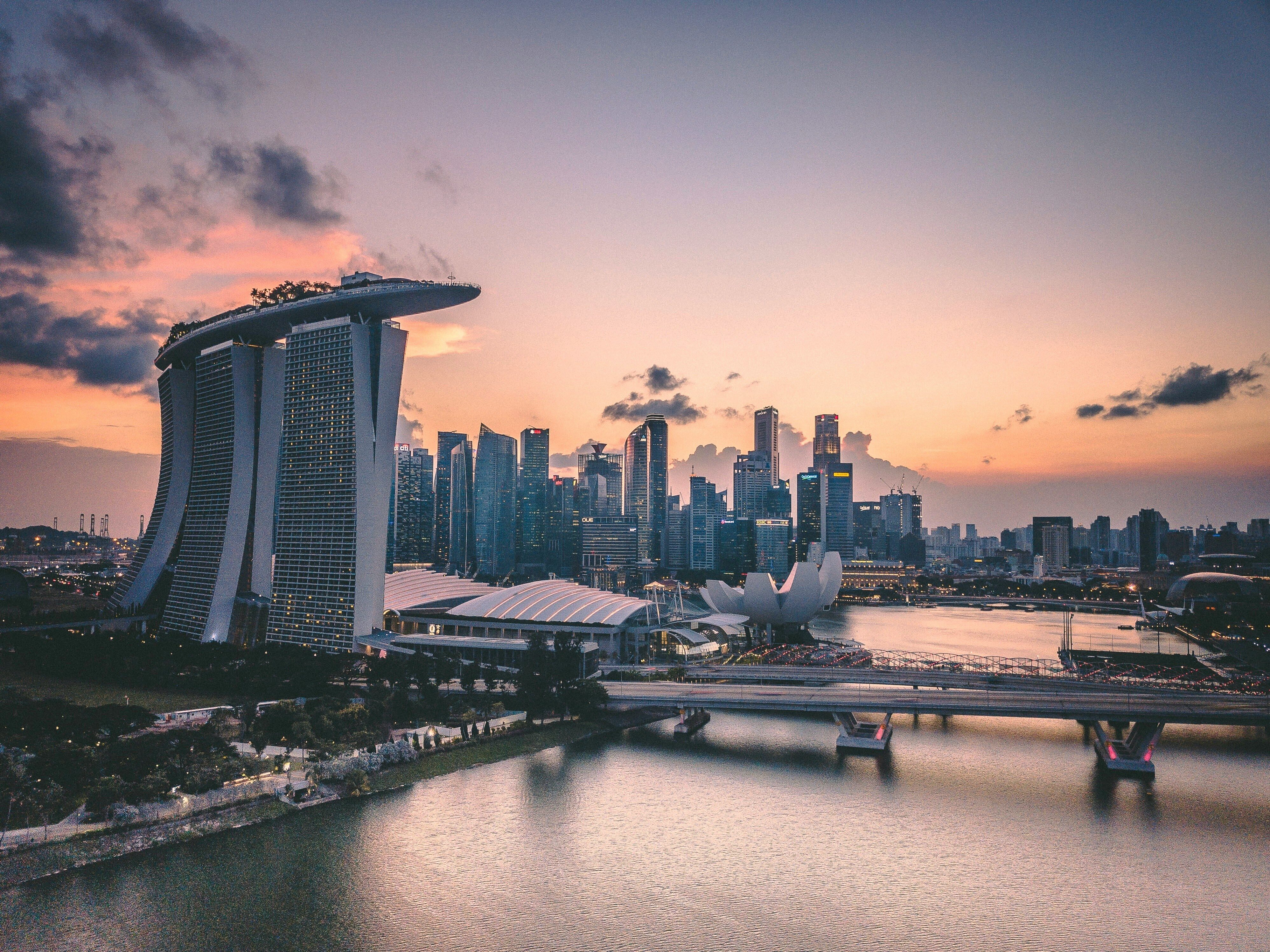
The quote was about Hong Kong—but in today’s world, Singapore arguably has a stronger claim to this ideal.
As some nations impose or contemplate restrictions on capital movement, certainty around the flexible deployment of capital has become critical.
Capital moves faster than ever. Investors demand both regulatory certainty and structural flexibility.
Against this backdrop, Singapore’s Variable Capital Company (VCC) stands out as one of the most compelling fund structures globally.
Introduced in 2020, the VCC was purpose-built to attract fund managers, family offices, and institutional investors, offering a modern, operationally efficient alternative to traditional domiciles such as Cayman Islands and Luxembourg.
Today, the Singapore VCC is regarded as one of the most sophisticated fund structures available anywhere in the world. Why?
1. A Fund Structure Designed for Flexibility
Unlike traditional corporate vehicles, the VCC was created specifically for investment management.
A VCC allows:
- Open-ended and closed-ended strategies within the same framework
- Issuing and redeeming shares without shareholder approval
- Paying dividends out of capital, improving distribution efficiency
This makes the VCC suitable for:
Private equity · Venture capital · Real estate · Family offices · Hedge funds
2. Access to Singapore’s Treaty Network
One of the VCC’s biggest advantages is Singapore’s Double Tax Agreement (DTA) network—one of the most extensive in the world.
Through a VCC, funds may benefit from:
- Reduced withholding taxes on dividends, interest, and royalties
- No capital gains tax in Singapore
- Treaty access unavailable in traditional offshore jurisdictions (e.g. Cayman)
For investors in treaty countries (e.g. Australia, New Zealand, China, the UK etc.), this can materially improve net returns.
3. Segregated Sub-Funds Under One Umbrella
A Singapore VCC can operate as an umbrella structure with multiple legally segregated sub-funds, each with its own:
- Assets
- Liabilities
- Investment mandate
This enables managers to:
- Run multiple strategies with different risk profiles
- Launch new products without creating new legal entities
- Fully ring-fence investor assets
The result: operational efficiency combined with institutional-grade asset protection.
4. Strength, Stability, and Global Credibility
Singapore consistently ranks among the world’s top financial centres—alongside New York and London—due to its:
- Strong rule of law
- Transparent regulatory framework
- Political stability
- Deep banking and wealth-management ecosystem
Oversight by the Monetary Authority of Singapore (MAS) ensures rigorous AML, CTF, and compliance standards—giving investors confidence that capital is held in a high-trust jurisdiction.
5. Tax Incentives Tailored for Global Capital
The VCC integrates seamlessly with Singapore’s flagship fund tax incentives, including Sections 13O and 13U.
Under these regimes:
- Foreign-sourced income may be tax-exempt
- Capital gains remain untaxed
- Dividends are paid with no withholding tax
For fund managers, this creates one of the most tax-efficient fund vehicles globally, particularly compared with offshore structures that lack treaty access.
6. A Modern Alternative to Cayman and Luxembourg
Singapore VCC vs Cayman SPC
- Cayman funds lack DTA access
- Singapore offers a stronger regulatory reputation
- VCCs provide tax exemptions with institutional credibility
VCC vs Luxembourg SICAV / RAIF
- Comparable treaty access
- Lower operational complexity
- Strategically positioned in Asia for cross-border capital flows
For global investors, the VCC represents a forward-looking structure combining efficiency with credibility.
7. Enhanced Privacy and Asset Protection
VCC ownership is not publicly disclosed, offering meaningful confidentiality—particularly attractive to high-net-worth families and private offices.
The segregated sub-fund regime further ensures investor assets are legally ring-fenced and protected.
8. Perfectly Positioned for Asia’s Growth
Singapore serves as a gateway to ASEAN, China, and India—some of the world’s fastest-growing markets.
Deep integration into regional trade and investment flows means the VCC benefits from Singapore’s connectivity, capital markets, and sophisticated financial infrastructure.
Conclusion: A 21st-Century Fund Structure for a 21st-Century Market
The Singapore VCC was designed for the realities of modern capital:
Flexible · Tax-efficient · Operationally streamlined · Institutionally trusted
As wealth becomes increasingly global and diversified, the VCC stands out as a best-in-class fund vehicle — whether for hedge strategies, private equity, venture capital, real estate, or multi-asset portfolios.
The result?
A structure that is not only competitive with the world’s leading domiciles—but one that may well become the preferred global standard in the decade ahead.
This is a guest article produced in partnership with 42 Wealth Management.
For more information on VCC structures, contact Matthew Dabbs — matthew@42wealthmanagement.com